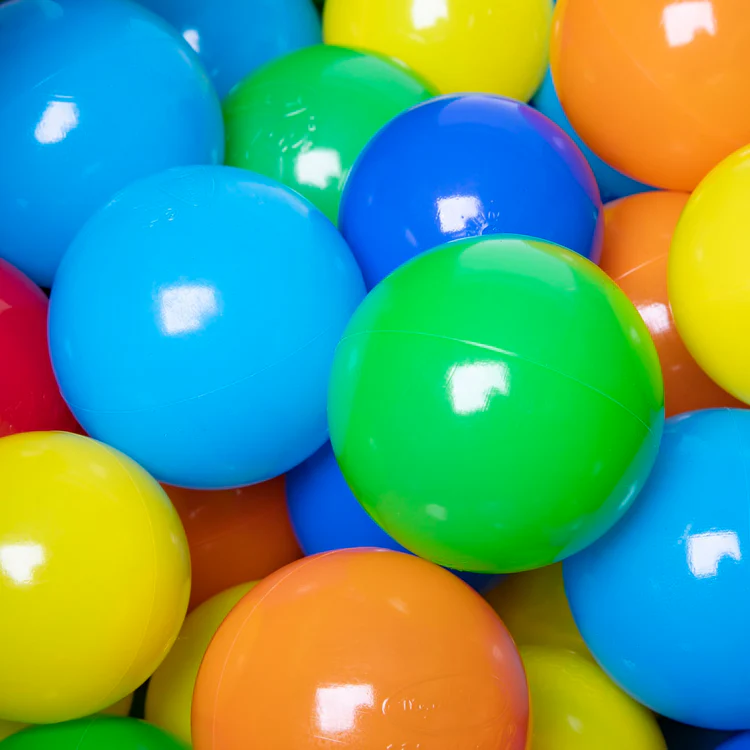
Where are pool balls best used? The ball pit is a children’s toy that has been well-known for a long time. Its popularity has not waned over the years; in fact, new, high-quality balls for ball pits have appeared on the market, as well as various types of containers and small pools designed for the youngest children. Where can we find dry ball pits today, and what are some uses for colorful plastic balls? Here are some tips! Pool balls—what should you know? Produced today balls for dry pools These are largely high-quality products that meet all the most important PN-EN standards and have safety certificates and approvals. When filling a pool, you should therefore choose balls from proven and trusted manufacturers who offer a certified product line. Such balls are characterized by high durability and safety. They are resistant to wear and tear, abrasion, and cracking. They are non-toxic, odorless, and hypoallergenic. The balls are sold in pre-packaged sets as well as assembled to order. This allows you to purchase, among other things: pool balls – 200 pieces, pool balls – 300 pieces, pool balls – 500 pieces, pool balls – 1,000 pieces, but also any other number, as well as any colors of balls. This opens up many possibilities for using the balls—not only by businesses and institutions, but also by individuals. As a result, a ball pit can now be set up almost anywhere, and young children can enjoy its benefits virtually anywhere! Pool balls – uses Where are plastic balls for dry pools best suited? Where can we find these kinds of attractions? First and foremost, in various types of playrooms and children’s parks. These can be standalone facilities, as well as sections or designated areas within larger amusement parks. Such playrooms or entertainment areas for toddlers can also be found, for example, in large stores or shopping malls. There, little ones can play while their parents shop. Large ball pits in spacious parks and playrooms with slides and trampolines are also very popular. The balls serve the additional purpose of providing a soft landing surface for the little ones. Ball pits are also a common feature in daycare centers and preschools—they work perfectly in these settings. They allow young children to burn off energy, but they also support their development and help them learn to work and play in a group. We can also make a dry pool ourselves, or even buy one and set it up at home—in a child’s room or outdoors, on the patio or in the garden. However, if the pool is left outdoors, we must remember to protect it properly so that the balls inside don’t get damaged or dirty. How do you set up a home ball pit for a toddler? Of course, along with the colorful balls, we can purchase a ready-made product designed specifically for this purpose. These types of pools are most often designed for the youngest children. They’re made of high-quality, thick foam, which is then covered with soft, decorative fabric. The height of this type of pool doesn’t exceed 30–50 centimeters. The recommended number of balls to fill it is between 200 and 300. Let’s keep in mind, however, that we can also use alternative solutions, especially for older toddlers, for whom a 100-centimeter-diameter pool will definitely be too small. What should we do in that case? To create a dry pool for older kids, we can successfully use a regular pool—whether it’s a small inflatable pool or a larger one. It all depends on where we want to place the pool, as well as the age group of the children it’s intended for. When we set up a dry pool for our little ones on our own, let’s remember to choose high-quality balls and to adjust their number appropriately to the size of the pool. An intuitive and precise calculator. All you need to do is specify the diameter of the balls you want to use to fill the pool, as well as the dimensions of your pool. It’s not just fun Interestingly, plastic balls aren’t just a fun, colorful way to fill a pool for little ones to play in. A dry pool filled with balls perfectly combines fun with a child’s development. That’s why these soft plastic balls can also be found in specialized rehabilitation rooms, as well as in therapy centers and sensory rooms. A dry ball pit can significantly improve a child’s hand-eye coordination and helps them learn to judge distances. Games and exercises performed in a dry pool help stimulate a child’s senses, thereby supporting the development of their sensory integration. Ball pools are increasingly used in sensory integration therapy because they stimulate a toddler’s sense of sight and touch. This type of stimulation is one of the most important aspects of supporting sensory integration, including the development of visual perception, proper motor skills, the ability to track movement, and proper reading skills. Ball pit—what else should you keep in mind? Colorful balls for a dry ball pit provide great fun and also support a toddler’s development. They work well in many different settings—not only in playrooms and amusement parks, but also in specialized rehabilitation and sensory therapy centers. You can even set up your own ball pit at home! However, it’s very important—regardless of where it’s located—to remember to properly care for and regularly clean all the balls in the pool. You should carefully wash the balls in a mixture of warm water and a safe detergent, as well as rinse them with disinfectants. In addition, it’s a good idea to regularly check the condition of the balls, and if you notice any abnormalities, damage, or cracks, immediately discard the damaged ones and replace them with new ones.