Sensory Development in a Ball Pit

Sensory Development in a Ball Pit Did you know that colorful pool balls aren’t just play accessories, but also a unique, multifunctional tool in the hands of a therapist? These plastic balls, used to fill a dry pool, clearly stimulate and support a toddler’s development in several different areas. So, can playing in a dry pool also help improve a child’s sensory development? Here are some tips! What is sensory development and integration? Immediately after we are born, a wide variety of stimuli—visual, auditory, and tactile—begin to reach our brain. Over time, our bodies begin not only to unconsciously receive these stimuli, but also to notice them, integrate them into a whole, and understand them. This is what is known as sensory integration, which should progress smoothly as the child develops. However, sometimes a child lacks the ability to process and understand these stimuli. This can lead to various difficulties in their daily life. Sensory integration issues can result, among other things, in being very picky about the flavors and textures of food, as well as the materials and colors of clothing. Children with sensory integration issues may be hypersensitive to stimuli or, conversely, may need an excessive amount of them. In cases of sensory integration disorders, it is recommended to undergo SI therapy, which is designed to stimulate the child’s nervous system and brain to properly receive, respond to, and understand stimuli. Of course, both the recommendation to begin therapy and the diagnosis of sensory integration disorders should be made by a doctor or a certified specialist. Ball Pits and Sensory Integration Dry pool with colorful balls This is an excellent way to stimulate a child’s senses and, as a result, support their sensory development. It’s worth remembering that toddlers who need professional support and SI therapy should exercise in a ball pit under the supervision of a specialist; however, those whose senses are developing normally and whom we simply want to stimulate and support can simply enjoy and play in the ball pit at home, at preschool, or in a playroom. How can a ball pit benefit a child’s sensory development? A toddler playing in a dry ball pit is, in a sense, immersed in all kinds of sensory stimuli. The colorful, contrasting balls intensely stimulate the child’s vision; what’s more, the child feels their shape, firmness, and smooth surface against their skin. When a toddler moves around in the pool or runs their hand over the balls inside, they create a distinctive sound—yet another stimulus reaching their brain during a simple, everyday activity. In this way, while enjoying the colorful balls and playing with parents or peers, the child intensely engages many of their senses simultaneously, stimulating them and subconsciously learning to perceive and respond to stimuli. Playing in a Ball Pit and Child Development Just playing in the ball pit, swimming Playing with colorful balls—walking, running, and moving the balls around—helps stimulate a toddler’s senses and supports their development. To further enhance these beneficial processes while ensuring your child has even more fun in the dry ball pit, it’s a good idea to come up with a few interesting activities they can do on their own or in a larger group. Playing in a ball pit can help your little one with sensory development—but that’s not all. Various games and activities among the colorful balls also have a positive impact on: development of fine motor skills, improved fitness and agility, support for the development of eye-hand coordination, learning to estimate distance, learning to work in a group and to compete, stress relief, learning to recognize and name colors. Ideas for Activities in a Ball Pit What kinds of games in a dry pool will be fun and educational for kids? There are so many possibilities! All it takes is a few simple ideas to keep the little ones entertained for a long time. An example of a simple game that teaches competition, color recognition, observation skills, and agility is a race to sort or collect balls. You can play on your own, organize a one-on-one race between a child and a parent, or hold a competition with a larger group divided into teams. Choose one color of balls to be removed from the pool, have the participants take their positions, and start the stopwatch. The team that collects the most balls of that color wins. Another simple game to play in the pool is searching for hidden objects other than balls. A parent must first hide a few smaller, soft toys, balls, or sensory bags among the plastic balls so that the little ones can then start looking for them. This game helps develop observational skills, and what’s more, the soft, small toys—which contrast with the smooth, harder balls—stimulate the children’s senses. Plastic balls for a dry pool can also be used for play outside the pool. The simplest activities—which support a child’s development, physical fitness, and dexterity—include throwing the ball, rolling it, or guiding it through a homemade obstacle course. The balls can also be used as part of a home sensory path to stimulate a child’s senses. This type of path can consist of soft pillows, foam mats, climbing frames, balance bags, balls, wooden blocks, as well as beans, rice, sand, and auditory and olfactory stimuli. Colorful pool balls can also be used in educational games. For example, we can take turns picking out different-colored balls and, together with our little one, name objects, toys, or foods that are the same color. If you have balls with letters on them, you can organize a similar game where you look for words that start with the same letter.

Sensory Development in a Ball Pit

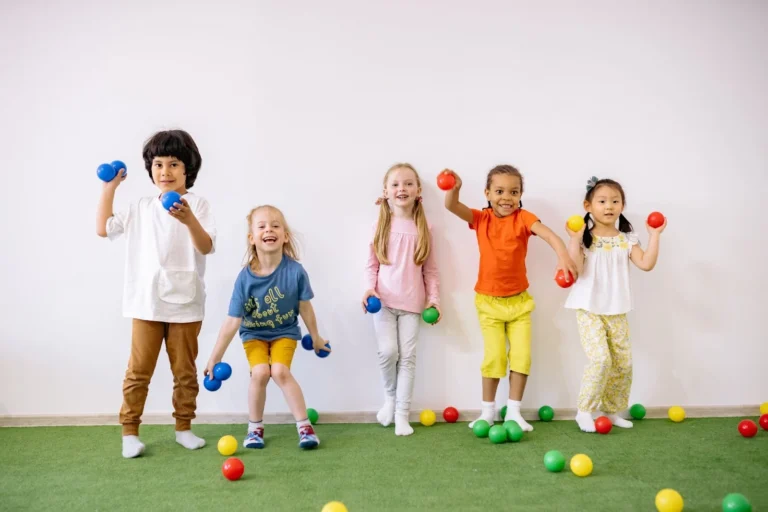
Did you know that colorful pool balls aren’t just play accessories, but also a unique, multifunctional tool in the hands of a therapist? These plastic balls, used to fill a dry pool, clearly stimulate and support a toddler’s development in several different areas. So, can playing in a dry pool also help improve a child’s sensory development? Here are some tips!

What is sensory development and integration?

Immediately after we are born, a wide variety of stimuli—visual, auditory, and tactile—begin to reach our brain. Over time, our bodies begin not only to unconsciously receive these stimuli, but also to notice them, integrate them into a whole, and understand them. This is what is known as sensory integration, which should progress smoothly as the child develops. However, sometimes a child lacks the ability to process and understand these stimuli. This can lead to various difficulties in their daily life. Sensory integration issues can result, among other things, in being very picky about the flavors and textures of food, as well as the materials and colors of clothing. Children with sensory integration issues may be hypersensitive to stimuli or, conversely, may need an excessive amount of them.

In cases of sensory integration disorders, it is recommended to undergo SI therapy, which is designed to stimulate the child’s nervous system and brain to properly receive, respond to, and understand stimuli. Of course, both the recommendation to begin therapy and the diagnosis of sensory integration disorders should be made by a doctor or a certified specialist.

Ball Pits and Sensory Integration

Dry pool with colorful balls This is an excellent way to stimulate a child’s senses and, as a result, support their sensory development. It’s worth remembering that toddlers who need professional support and SI therapy should exercise in a ball pit under the supervision of a specialist; however, those whose senses are developing normally and whom we simply want to stimulate and support can simply enjoy and play in the ball pit at home, at preschool, or in a playroom.

How can a ball pit benefit a child’s sensory development? A toddler playing in a dry ball pit is, in a sense, immersed in all kinds of sensory stimuli. The colorful, contrasting balls intensely stimulate the child’s vision; what’s more, the child feels their shape, firmness, and smooth surface against their skin. When a toddler moves around in the pool or runs their hand over the balls inside, they create a distinctive sound—yet another stimulus reaching their brain during a simple, everyday activity. In this way, while enjoying the colorful balls and playing with parents or peers, the child intensely engages many of their senses simultaneously, stimulating them and subconsciously learning to perceive and respond to stimuli.

Playing in a Ball Pit and Child Development

Just playing in the ball pit, swimming Playing with colorful balls—walking, running, and moving the balls around—helps stimulate a toddler’s senses and supports their development. To further enhance these beneficial processes while ensuring your child has even more fun in the dry ball pit, it’s a good idea to come up with a few interesting activities they can do on their own or in a larger group. Playing in a ball pit can help your little one with sensory development—but that’s not all. Various games and activities among the colorful balls also have a positive impact on:

  • development of fine motor skills,
  • improved fitness and agility,
  • support for the development of eye-hand coordination,
  • learning to estimate distance,
  • learning to work in a group and to compete,
  • stress relief,
  • learning to recognize and name colors.

Ideas for Activities in a Ball Pit

What kinds of games in a dry pool will be fun and educational for kids? There are so many possibilities! All it takes is a few simple ideas to keep the little ones entertained for a long time. An example of a simple game that teaches competition, color recognition, observation skills, and agility is a race to sort or collect balls. You can play on your own, organize a one-on-one race between a child and a parent, or hold a competition with a larger group divided into teams. Choose one color of balls to be removed from the pool, have the participants take their positions, and start the stopwatch. The team that collects the most balls of that color wins.

Another simple game to play in the pool is searching for hidden objects other than balls. A parent must first hide a few smaller, soft toys, balls, or sensory bags among the plastic balls so that the little ones can then start looking for them. This game helps develop observational skills, and what’s more, the soft, small toys—which contrast with the smooth, harder balls—stimulate the children’s senses.

Plastic balls for a dry pool can also be used for play outside the pool. The simplest activities—which support a child’s development, physical fitness, and dexterity—include throwing the ball, rolling it, or guiding it through a homemade obstacle course. The balls can also be used as part of a home sensory path to stimulate a child’s senses. This type of path can consist of soft pillows, foam mats, climbing frames, balance bags, balls, wooden blocks, as well as beans, rice, sand, and auditory and olfactory stimuli.

Colorful pool balls can also be used in educational games. For example, we can take turns picking out different-colored balls and, together with our little one, name objects, toys, or foods that are the same color. If you have balls with letters on them, you can organize a similar game where you look for words that start with the same letter.

Everplast - Home Page

Everplast Ltd.
ul. Stefan Żeromskiego 9
62-300 Września

Registration data

NIP: 7891795423
REGON: 520534615

Production facility

Wrocławska 42k,
62-300 Września

© 2026 – Everplast – Manufacturer of pool balls for children. All rights reserved.