Children’s Safety and Hygiene in a Ball Pit

Children’s Safety and Hygiene in a Ball Pit A ball pit is a great attraction for children of all ages. It’s a place where they can not only burn off energy and spend time being active, but also play with their peers, develop their skills, and learn. As with any form of play, safety—if not the most important factor—is also crucial for little ones in a ball pit, in addition to having fun. So how can you ensure that the time spent among the colorful balls is nothing but completely safe and a blast? A Dry Pool and Its Benefits A ball pit filled with colorful balls isn’t just a guarantee of great fun—it’s also a source of many opportunities for a toddler’s development. How is that possible? First of all, the colorful balls stimulate a child’s sense of sight, while their smoothness and spherical shape stimulate the sense of touch. This, in turn, is crucial for the proper development of a toddler’s sensory integration—that is, the ability to perceive external stimuli, respond to them, and understand them. Sensory integration is extremely important for every person’s development and, moreover, is nearly essential for functioning properly in everyday life. Playing in a dry pool helps improve fitness and physical condition, and also supports the development of motor and visual-motor skills. By playing and spending time among colored balls, young children learn to judge distances accurately, become familiar with colors, and develop social skills. When playing in a larger group, children learn what competition is all about and how to both compete in a healthy way and cooperate. As you can easily see, a dry pool is therefore a multifunctional attraction that is very beneficial for a child’s physical fitness, mental well-being, and overall development. Safe Fun in a Ball Pit—What Should You Keep in Mind? A ball pit is a safe place for little ones. Before playtime begins, however—especially when there’s a larger group of children—it’s a good idea to go over the most important, basic safety rules with the kids. In playrooms or other public places where you can find large ball pits, the facility’s rules and regulations serve this purpose. If, on the other hand, we’re organizing this kind of play at home or at preschool, we need to instruct the little ones ourselves on how to play safely in the ball pit. Children should play in the pool wearing socks or soft, clean shoes. If possible, children should leave any personal items—such as hats, sunglasses, or backpacks—outside the pool. Food and drinks should also not be brought into the pool to avoid getting yourself, other swimmers, or the pool balls dirty. A dry ball pit shouldn’t be overfilled with balls, but there shouldn’t be too few balls in it either. To optimally adjust the number of balls to the size of the ball pit, it’s a good idea to use a helpful, intuitive calculator. Checking the Condition of Pool Floats To ensure children’s safety in a ball pit, it’s also very important that the balls filling it are in good condition. It’s therefore a good idea to check them regularly to make sure none of them have been damaged due to excessive or prolonged use. Every so often, it’s a good idea to inspect all the colorful balls in the ball pit and make sure there are no dents, cracks, scratches, or other imperfections on their surfaces. If this happens, discard the damaged ball and replace it with a new one. After a very long period of use, some of the balls may also lose some of their color. It’s a good idea to replace these with new ones, especially if you want the balls in the pool to look good and retain their vibrant colors. Choose the highest-quality balls What else affects the safety and comfort of little ones playing in a dry pool? Of course, the quality of the balls we choose. To ensure that wading in colorful balls is completely safe for children, we should choose only the highest-quality pool balls. These should be products made from top-notch materials, characterized by high durability and resistance to damage. Pool balls should be made of certified, soft plastic that is completely safe for children, odorless, and hypoallergenic. The manufacturer of pool balls should hold official certificates and certifications that confirm the product’s quality. It is also very important that the colored balls for a dry pool be the right size. The optimal size for the balls is 6 or 7 centimeters in diameter. This size makes the balls suitable for small children’s hands. At the same time, it is impossible for a child to bite or swallow them. The surface of the balls should be perfectly smooth, free of any seams or lumps. Clean the colorful pool balls regularly To ensure that little ones can play safely in a dry pool, we must also remember to regularly clean the pool’s filling—that is, the colorful plastic balls. They should be washed in warm water with detergent, making sure to use a product that is safe for plastic. Otherwise, we may damage the surface of the balls. It’s also a good idea to disinfect each ball using a special antibacterial solution. After washing, each ball should be thoroughly dried before being put back into the pool. It’s also important to consider where and how we store the balls. If possible, store them in a sealable container or a breathable bag. If not, make sure to use a thick, tight-fitting cover for the pool. Do not leave the balls outside unprotected, and do not expose them to moisture, rain, or cold. It’s a good idea to follow all of the above rules and also teach young children how to play safely in the ball pit. To make the time children spend among the colorful balls even more enjoyable, you can also come up with a few games and activities that focus on physical fitness, dexterity, or learning.

Children’s Safety and Hygiene in a Ball Pit

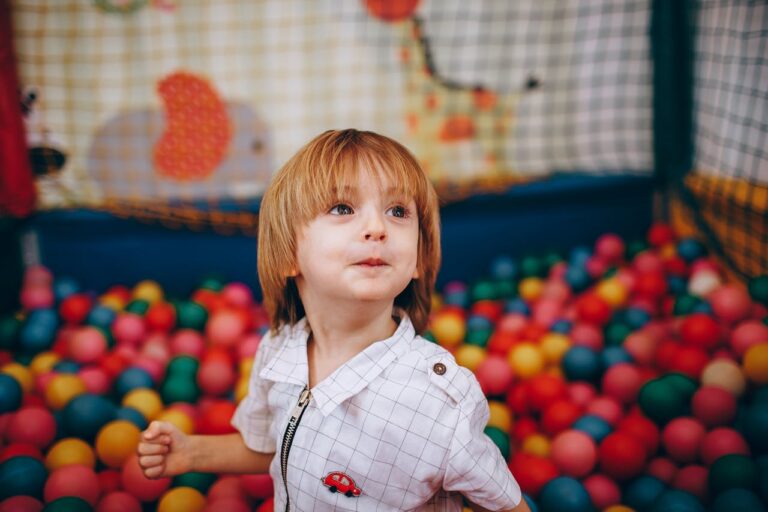
A ball pit is a great attraction for children of all ages. It’s a place where they can not only burn off energy and spend time being active, but also play with their peers, develop their skills, and learn. As with any form of play, safety—if not the most important factor—is also crucial for little ones in a ball pit, in addition to having fun. So how can you ensure that the time spent among the colorful balls is nothing but completely safe and a blast?

A Dry Pool and Its Benefits

A ball pit filled with colorful balls isn’t just a guarantee of great fun—it’s also a source of many opportunities for a toddler’s development. How is that possible? First of all, the colorful balls stimulate a child’s sense of sight, while their smoothness and spherical shape stimulate the sense of touch. This, in turn, is crucial for the proper development of a toddler’s sensory integration—that is, the ability to perceive external stimuli, respond to them, and understand them. Sensory integration is extremely important for every person’s development and, moreover, is nearly essential for functioning properly in everyday life.

Playing in a dry pool helps improve fitness and physical condition, and also supports the development of motor and visual-motor skills. By playing and spending time among colored balls, young children learn to judge distances accurately, become familiar with colors, and develop social skills. When playing in a larger group, children learn what competition is all about and how to both compete in a healthy way and cooperate.

As you can easily see, a dry pool is therefore a multifunctional attraction that is very beneficial for a child’s physical fitness, mental well-being, and overall development.

Safe Fun in a Ball Pit—What Should You Keep in Mind?

A ball pit is a safe place for little ones. Before playtime begins, however—especially when there’s a larger group of children—it’s a good idea to go over the most important, basic safety rules with the kids. In playrooms or other public places where you can find large ball pits, the facility’s rules and regulations serve this purpose. If, on the other hand, we’re organizing this kind of play at home or at preschool, we need to instruct the little ones ourselves on how to play safely in the ball pit.

Children should play in the pool wearing socks or soft, clean shoes. If possible, children should leave any personal items—such as hats, sunglasses, or backpacks—outside the pool. Food and drinks should also not be brought into the pool to avoid getting yourself, other swimmers, or the pool balls dirty.

A dry ball pit shouldn’t be overfilled with balls, but there shouldn’t be too few balls in it either. To optimally adjust the number of balls to the size of the ball pit, it’s a good idea to use a helpful, intuitive calculator.

Checking the Condition of Pool Floats

To ensure children’s safety in a ball pit, it’s also very important that the balls filling it are in good condition. It’s therefore a good idea to check them regularly to make sure none of them have been damaged due to excessive or prolonged use. Every so often, it’s a good idea to inspect all the colorful balls in the ball pit and make sure there are no dents, cracks, scratches, or other imperfections on their surfaces. If this happens, discard the damaged ball and replace it with a new one.

After a very long period of use, some of the balls may also lose some of their color. It’s a good idea to replace these with new ones, especially if you want the balls in the pool to look good and retain their vibrant colors.

Choose the highest-quality balls

What else affects the safety and comfort of little ones playing in a dry pool? Of course, the quality of the balls we choose. To ensure that wading in colorful balls is completely safe for children, we should choose only the highest-quality pool balls. These should be products made from top-notch materials, characterized by high durability and resistance to damage.

Pool balls should be made of certified, soft plastic that is completely safe for children, odorless, and hypoallergenic. The manufacturer of pool balls should hold official certificates and certifications that confirm the product’s quality.

It is also very important that the colored balls for a dry pool be the right size. The optimal size for the balls is 6 or 7 centimeters in diameter. This size makes the balls suitable for small children’s hands. At the same time, it is impossible for a child to bite or swallow them. The surface of the balls should be perfectly smooth, free of any seams or lumps.

Clean the colorful pool balls regularly

To ensure that little ones can play safely in a dry pool, we must also remember to regularly clean the pool’s filling—that is, the colorful plastic balls. They should be washed in warm water with detergent, making sure to use a product that is safe for plastic. Otherwise, we may damage the surface of the balls. It’s also a good idea to disinfect each ball using a special antibacterial solution. After washing, each ball should be thoroughly dried before being put back into the pool.

It’s also important to consider where and how we store the balls. If possible, store them in a sealable container or a breathable bag. If not, make sure to use a thick, tight-fitting cover for the pool. Do not leave the balls outside unprotected, and do not expose them to moisture, rain, or cold.

It’s a good idea to follow all of the above rules and also teach young children how to play safely in the ball pit. To make the time children spend among the colorful balls even more enjoyable, you can also come up with a few games and activities that focus on physical fitness, dexterity, or learning.

Everplast - Home Page

Everplast Ltd.
ul. Stefan Żeromskiego 9
62-300 Września

Registration data

NIP: 7891795423
REGON: 520534615

Production facility

Wrocławska 42k,
62-300 Września

© 2026 – Everplast – Manufacturer of pool balls for children. All rights reserved.