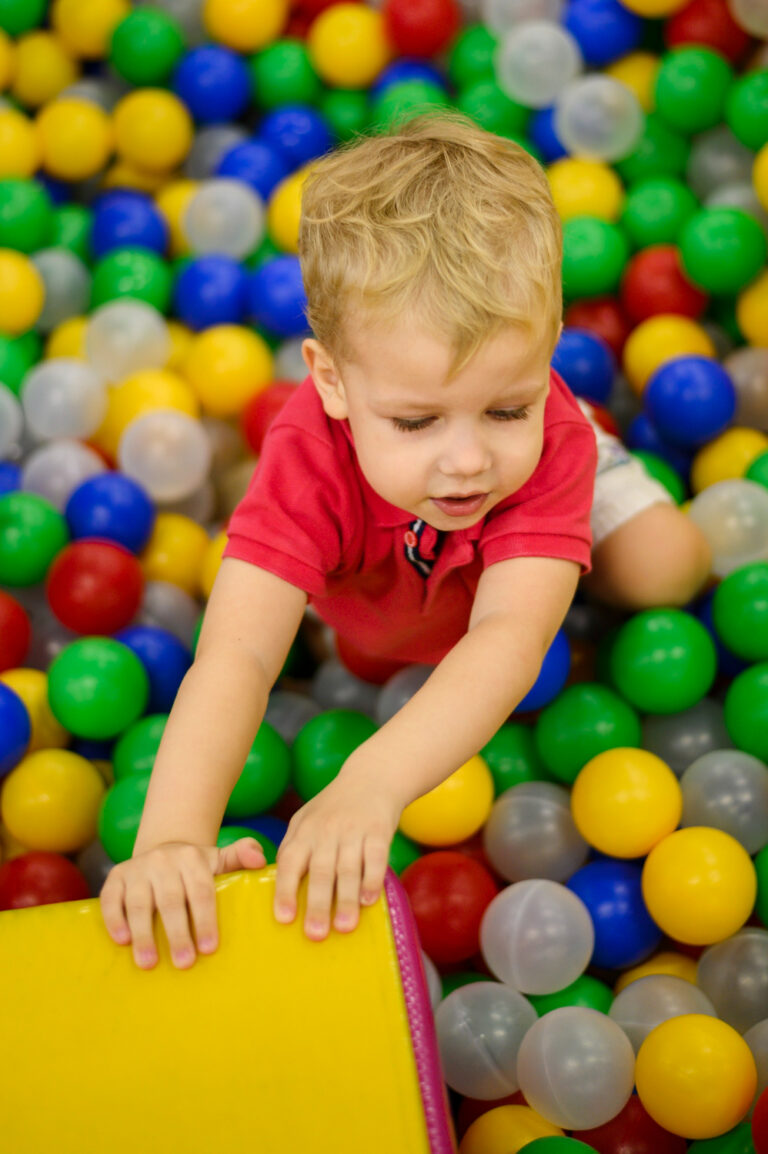
If you asked the average five-year-old what comes to mind when they think of a playroom, they would point to a “sea of balls” without hesitation. For an investor, however, a ball pit is much more than just entertainment—it’s an investment that must be safe, easy to maintain, and tailored to the available space. Choosing the right ball pit is a process where mathematics (such as calculating the number of balls) intersects with child development psychology and hard economics.
If you asked the average five-year-old what comes to mind when they think of a playroom, they would point to a “sea of balls” without hesitation. For an investor, however, a ball pit is much more than just entertainment—it’s an investment that must be safe, easy to maintain, and tailored to the available space. Choosing the right ball pit is a process where mathematics (such as calculating the number of balls) intersects with child development psychology and hard economics.
What exactly is a professional ball pit?
This is a certified structure (compliant with the PN-EN 1176 standard), designed to withstand the weight of a dozen or so children at once and intensive use for many hours a day. It consists of a flexible yet durable core (usually polyurethane foam) and a cover that must be abrasion-resistant and easy to disinfect.
Developmental Benefits: Why Are Beads So Important?
Before we get into the technical details, it’s worth understanding what a swimming pool does for a child.
Motor Skills and Coordination – Moving around in a ball pit provides resistance similar to that of water, but in a safer environment. The child must engage deep muscles to maintain balance, which greatly develops body awareness (also known as “proprioception”).
Sensory regulation —for children with hypersensitivity or hyposensitivity, the pressure of hundreds of balls against the body has a calming effect. It is a form of deep massage that helps soothe the nervous system after intense play on the slides.
Where is the best place to put a pool?
A ball pit is standard, but its design varies by zone:
Toddler Zone (0–3 years) – This area features smaller, soft foam pools with low walls (about 30–40 cm), making it easier for children to get in.
Multi-level structures (climbing frames) – here, the ball pit is usually at the bottom of a slide. It must have a reinforced bottom and higher walls to prevent the balls from spilling out into the rest of the room.
Size Selection and Space Planning
The most common mistake is buying a pool “by eye.” In smaller spaces (up to 50 m²), corner models work best, as they allow you to make the most of the available space. In large entertainment centers, however, a pool can become a focal point with an area of up to 20–30 m², allowing a large group of children to play at the same time.
Optimal pool specifications based on your needs:
Pool Type
Recommended size
Ball Level
Target audience
Compact (foam)
200 x 200 cm
about 25–30 cm
1–4 years
Medium (modular)
300 x 400 cm
about 40 cm
3–8 years
Large (integrated)
Over 20 m²
40–50 cm
All groups
How many balls do you actually need?
This is the most important question when it comes to budgeting. It is generally assumed that 1 m³ of pool volume requires approximately 3,000–4,000 pieces with a diameter of 7 cm.
Diameter matters —the market standard is 7 cm. Smaller balls (6 cm) create a denser fill, but you’ll need significantly more of them, which will significantly increase costs. Larger balls (8 cm), on the other hand, allow you to fill the space more affordably, but they’re less comfortable and make it harder for smaller children to dive in.
Quality and Material (LDPE) – Choose only low-density polyethylene (LDPE) balls. They are flexible and return to their original shape when pressed. Avoid the cheapest alternatives: they tend to crack, and the sharp edges that result pose a huge hazard in a public play area.
Design: What to Look for When Buying?
When choosing between an inflatable pool and a modular pool, consider the intended use.
Foam pools, lined with certified Skaj (medical-grade PVC), are ideal for smaller rooms. They are portable and easy to move when cleaning the floor.
Modular pools (furniture board + foam + sturdy sheathing) are permanent solutions, typically installed as part of a larger structure.
3 key technical details:
Closures —the Velcro strips should be wide and hidden under the fabric overlaps.
Upholstery —the synthetic leather-type material must be certified as flame-retardant and be resistant to sweat and abrasion.
Bottom – Ideally, the pool should have an integrated floor mat, which prevents the walls from spreading apart.
The Budget: More Than Just the Price on the Invoice
Purchase cost – a medium-sized ball pit (with a set of balls) costs between 4,000 and 12,000 PLN, depending on the quality of the materials.
Hygiene is the most important fixed cost. In a ball pit, the pool must be disinfected regularly. Special ball washers are the most effective; they can clean and dry thousands of balls in just a few hours. The cost of a professional cleaning service is usually several hundred zlotys per visit.
Replenishment – statistically, about 5–10% of the balls are lost each year (due to breakage or being taken by young visitors). It’s worth factoring this into the cost estimate.
Is it worth doing?
When comparing a ball pit to other attractions (such as climbing walls or trampolines), the ball pit wins out in terms of versatility. It appeals to the widest age range and keeps children entertained for longer. The foundation of its success lies in attention to detail: the right density of balls, regular cleaning, and materials that won’t wear out after just one season. Investing in a high-quality set helps you build a reputation as a safe and clean facility—and these are precisely the two qualities parents value most when choosing a play center.
Everplast Ltd. ul. Stefan Żeromskiego 9 62-300 Września