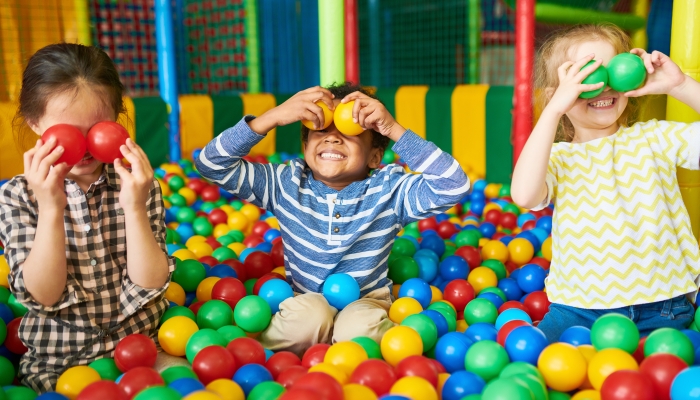
How do you choose balls for a dry pool? A dry ball pit guarantees children lots of fun and a chance to burn off energy, while also helping them develop motor skills and cognitive functions. The colorful balls can be used to fill large pools as well as slightly smaller or very small areas. It all depends on where the ball pit is located and the age group of the children it’s intended for. Before you start filling it, it’s a good idea to consider which balls to choose. So, which ones colorful pool balls Which one should I choose? What should I consider when making my choice, and what should I avoid? Why is choosing the right balls so important? A dry ball pit can be a place for fun and safe play. However, for this to be the case, it’s essential to fill it exclusively with top-quality balls that not only look good but also offer a number of important benefits. Only top-quality, colorful balls are suitable for a one-year-old, for example. Making an informed and appropriate choice is therefore essential for keeping our children safe! Beads for a dry pool – key specifications When choosing plastic beads to fill a dry pool, we should pay attention to a few basic characteristics. These are: ball dimensions, the type of material they are made of, the shape of the balls, number of balls, color scheme. Dimensions of the balls for the dry pool One of the key characteristics of plastic pool balls is their size. This is most often determined by the diameter of the balls. The balls should be large enough that a toddler cannot swallow or chew on them, yet small enough for a toddler’s tiny hand to grasp them. Balls with a diameter of 6 or 7 centimeters are considered optimal, and those are the ones you should choose. Material of pool balls The material used to make pool balls is an extremely important consideration. It directly affects the safety of the product—and, consequently, the safety of the children playing with it—as well as the durability, resilience, and appearance of the balls. Balls made from high-quality material retain their appearance, colors, and shape for a long time, withstand intense, regular use well, and do not lose their shape. Balls for a dry pool should be made exclusively from the highest-quality soft plastic that has the necessary approvals and certifications—confirming its quality and high level of safety. The balls must be non-toxic, odorless, and hypoallergenic—only then will they be suitable for toddlers, even those as young as one year old. The Shape of Plastic Balls Of course, the type of material the balls are made of is very important. However, it’s also worth paying attention to how carefully they’re made and finished. Balls of the appropriate size should be painted exclusively with completely safe, non-toxic paints or dyes, and their surface should remain completely smooth. There should be no visible or palpable bumps, scratches, or protrusions at the seams. Any such imperfections could pose a potential hazard to a young child. Balls damaged during the manufacturing process should be automatically rejected before they reach the market. Colors of Pool Balls While the color of the balls for a dry pool does not directly affect their quality or safety, it is nonetheless an important product feature. It’s a good idea to choose balls in a variety of colors and shades—this will make the entire pool look attractive and aesthetically pleasing. What’s more, a variety of vibrant colors will help develop a toddler’s sensory integration and make playtime in the pool more engaging. With these balls, a child can learn colors in a fun and accessible way, sorting them or grouping them by similar shades. For slightly older children, this can also be an interesting way to start learning the names of colors in another language. Number of balls in the pool For a dry pool to function properly, it must be filled with the right number of plastic balls. Otherwise, it may not be fun for your little one, may not be impressive enough, and—if there are too many balls—could even become potentially dangerous. How many balls should we put in a dry pool? It all depends on the diameter of the balls you choose, as well as the exact dimensions of the pool. For example, for a small pool measuring 90 x 30, intended for a one-year-old child, the optimal number of balls is about 200 to 250. To precisely calculate how many balls you’ll need for your pool, it’s worth using an automatic and intuitive calculator . Balls for a dry pool—what else should you keep in mind? When choosing the size and number of balls for the pool, let’s remember to take our little one’s age and abilities into account. If your child can’t stand on their own yet, it’s a good idea to choose a small pool and fill it with just enough balls to ensure they can play safely while sitting. It’s also worth keeping in mind that our responsibility doesn’t end with just choosing the balls. It’s also very important to take care of the balls once they’re in the pool. You should check them regularly for cleanliness, and every so often, you need to wash all the balls in water with a mild detergent or disinfectant. After washing them thoroughly, it’s also necessary to dry the balls carefully. It’s a good idea to check the condition of the balls regularly to make sure none of them have been damaged or deformed. If this happens, discard the damaged balls and replace them with new ones.